
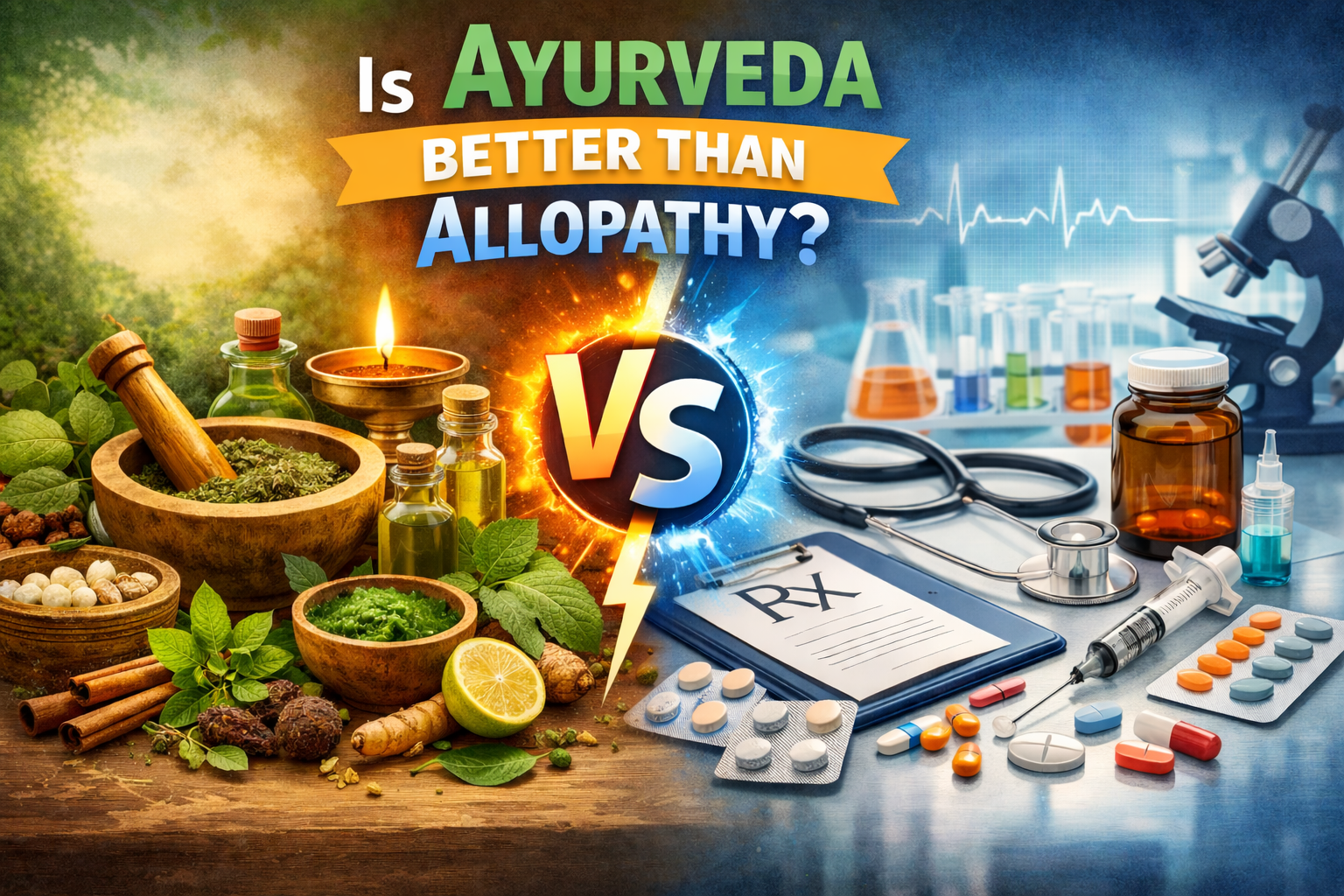

In the world of healthcare, two prominent systems stand out—Ayurveda and Allopathy. While both aim to treat illness and improve human well-being, their approaches, philosophies, and outcomes often differ significantly. This has sparked a long-standing debate: Is Ayurveda better than Allopathy? The answer isn’t as simple as one being better than the other. Instead, each system has its strengths, and understanding them can help individuals make informed health choices.
Understanding Ayurveda: Ayurveda is a 5,000-year-old holistic healing system that originated in India. It focuses on maintaining balance among the body, mind, and spirit. Treatments are personalized and based on individual body types (doshas—Vata, Pitta, and Kapha). Ayurveda emphasizes natural healing, using herbs, diet, yoga, and lifestyle changes to restore health.
Key Features of Ayurveda:
- Focuses on root causes, not just symptoms
- Uses natural, plant-based remedies
- Emphasizes prevention and lifestyle correction
- Minimal or no side effects when used
- properly Healing is gradual and long-term
Understanding Allopathy: Allopathy, also known as modern Western medicine, focuses on scientifically tested treatments that offer quick relief. It often includes the use of pharmaceutical drugs, surgery, and advanced diagnostic tools. Allopathy is effective in managing emergency situations, acute diseases, and infections.
Key Features of Allopathy:
- Rapid and targeted treatment of symptoms
- Backed by rigorous scientific research
- Excellent for surgery, trauma, and infections
- Easily available and widely accepted globally
- May come with side effects or long-term dependencies
When Ayurveda May Be Better
- Chronic issues like arthritis, digestive problems, skin disorders, stress, and lifestyle diseases often respond well to Ayurvedic treatments.
- It supports detoxification, boosts immunity, and promotes long-term wellness.
- Ideal for those looking to treat illness naturally and gradually.
When Allopathy May Be Better
- For emergencies, surgeries, infections, or life-threatening conditions, allopathy is unmatched.
- It’s also more accessible and fast-acting, especially in hospitals and clinics.
Why Not Both? Integrative Medicine
Instead of viewing Ayurveda and Allopathy as opposites, many experts now advocate for an integrative approach, combining the best of both systems. For example, someone might use allopathic antibiotics to manage an infection while also taking Ayurvedic tonics to rebuild immunity.
Final Thoughts
So, is Ayurveda better than Allopathy? It depends on the situation, the condition, and the individual. Ayurveda is excellent for long-term health management and prevention, while Allopathy excels in acute care and emergencies. The real power lies in knowing when and how to use each system.
In the future, the most effective healthcare might not come from choosing one over the other—but from harmoniously blending both for holistic well-being.
Eget felis eget nunc lobortis. Dui faucibus in ornare quam viverra orci. Lectus vestibulum mattis ullamcorper velit sed ullamcorper morbi. Et ultrices neque ornare aenean euismod elementum.
Posuere sollicitudin aliquam ultrices sagittis orci a scelerisque. Non consectetur a erat nam. Interdum consectetur libero id faucibus nisl tincidunt eget nullam non. Lectus urna duis convallis convallis tellus id interdum.