


Why Ayurveda Is the Best Natural Remedy for Chronic Diseases
Chronic diseases—such as diabetes, arthritis, asthma, hypertension, and kidney disorders—have become increasingly prevalent across India. With rising stress levels, sedentary lifestyles, and poor eating habits, conventional medicine often provides symptomatic relief but rarely addresses the root causes. This is where Ayurveda, the ancient Indian holistic healing system, truly shines..
What Makes Ayurveda Different?
Ayurveda defines health as balance—not just in the body, but in the mind, spirit, and environment. It goes beyond treating symptoms to restoring harmony among the doshas (Vata, Pitta, Kapha), dhatus (body tissues), malas (waste), and agni (digestive metabolism). This holistic, individualized approach is why Ayurveda is recognized as effective for chronic conditions worldwide
What Makes Ayurveda Different?
Ayurveda defines health as balance—not just in the body, but in the mind, spirit, and environment. It goes beyond treating symptoms to restoring harmony among the doshas (Vata, Pitta, Kapha), dhatus (body tissues), malas (waste), and agni (digestive metabolism). This holistic, individualized approach is why Ayurveda is recognized as effective for chronic conditions worldwide
- Personalized Healing: Ayurvedic treatment for chronic pain
Every individual has a unique Prakriti (constitution). An Ayurvedic practitioner customizes treatment by identifying your dosha imbalance and employing tailored remedies—herbs, diet, lifestyle adjustments, plus detox therapies like Panchakarma—to restore balance. This personalized care ensures deeper, longer-lasting healing .
- Detoxification & Rejuvenation: Panchakarma for chronic disease management
Panchakarma—meaning “five actions”—is Ayurveda’s cornerstone for deep cleansing. It eliminates toxins, rejuvenates tissues, and enhances immunity. Clinical evidence supports its use in chronic kidney disease, arthritis, and asthma. For instance, CKD patients treated with Ayurvedic formulations and Panchakarma showed measurable improvements in kidney function and symptoms.
- Effective for Lifestyle Diseases
Ayurveda is uniquely suited to managing non-communicable diseases—like diabetes, hypertension, obesity, arthritis, heart disease, neurodegenerative disorders, and respiratory ailments—through dietary planning (Ahara), lifestyle adjustments (Vihara), and targeted herbs.
-
Evidence-Based Herbal Powerhouses
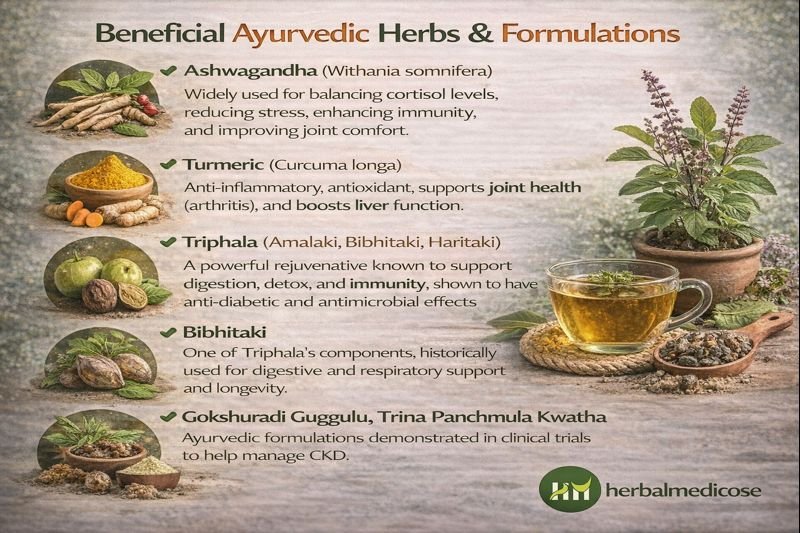
- Ashwagandha (Withania somnifera)
Widely used for balancing cortisol levels, reducing stress, enhancing immunity, and improving joint comfort.
- Turmeric (Curcuma longa)
Anti-inflammatory, antioxidant, supports joint health (arthritis), and boosts liver function.
- Triphala (Amalaki, Bibhitaki, Haritaki)
A powerful rejuvenative known to support digestion, detox, and immunity; shown to have anti-diabetic and antimicrobial effects.
- Bibhitaki
One of Triphala’s components, historically used for digestive and respiratory support and longevity.
- Gokshuradi Guggulu, Trina Panchmula Kwatha
Ayurvedic formulations demonstrated in clinical trials to help manage CKD.
- Holistic Lifestyle Integration: Ayurveda diet plan & routine
The Dinacharya (daily routine) and Ritucharya (seasonal regimen) guide everything from diet and hydration to sleep, exercise, meditation, and ethical living. Such habits prevent dosha imbalances, boost immunity, and reduce the risk of chronic illnesses like obesity and mental stress.
- Treating the Root, Not Just the Symptoms
Conventional treatments often alleviate symptoms but fail to cure. Ayurveda digs deeper by identifying and removing Nidana—root causes such as poor digestion, toxin buildup, stress, or hormonal imbalance. Once these are addressed, the body naturally heals, and relapses become rare .
- Safety & Tradition
With a history spanning over 5,000 years and formal regulation under India’s Ministry of AYUSH, Ayurveda is deeply woven into Indian life and widely trusted—about 80% of Indians use it for primary healthcare needs.
- Case Studies & Clinical Data
- Chronic Kidney Disease (CKD):
Ayurvedic interventions, including Trivrit Avleha, Chander Vati, and herbal decoctions, brought significant symptom relief and improved kidney function—often within 3 months. - Arthritis & Musculoskeletal Disorders:
Conditions like sciatica, osteoarthritis, and rheumatoid arthritis have responded well to combined therapies such as herbal oils, steam therapy, Basti (medicated enemas), Abhyanga (oil massage), and lifestyle modifications. - Respiratory & Skin Disorders:
Chronic asthma, bronchitis, psoriasis, and eczema achieve improvement via detoxification, herbal anti-inflammatories, and procedures like Vamana (therapeutic vomiting), Virechana (purgation), Raktamokshana (bloodletting when necessary), along with supportive herbs.
- Global Recognition & Scientific Validation
Contemporary research supports Ayurveda’s effectiveness in managing type 2 diabetes and arthritis, and institutions like WHO are acknowledging its value in global integrative medicine programs .
-
Addressing Concerns: Heavy Metals & Standardization
While rare, some Ayurvedic products have contained toxic metals. However, increasing regulatory oversight under AYUSH, GMP-certified manufacturing, and standardized processing have significantly improved safety. To ensure purity, always consult verified Ayurvedic practitioners and trusted brands.
Category : Ayurvedic-Blogs HomePage Life style
Tags : #ayurvedic #ayurvedic beauty treatment #ayurvedic treatment for hair ayurvedaic medicine ayurvedic diet best ayurvedic medicine